Custom Engineering
Rentapen delivers experience, efficiency and economy to manufacturers who seek custom welding fixture solutions tailored to meet exacting production requirements, specialized applications and unique design specifications.
Design and Build Services
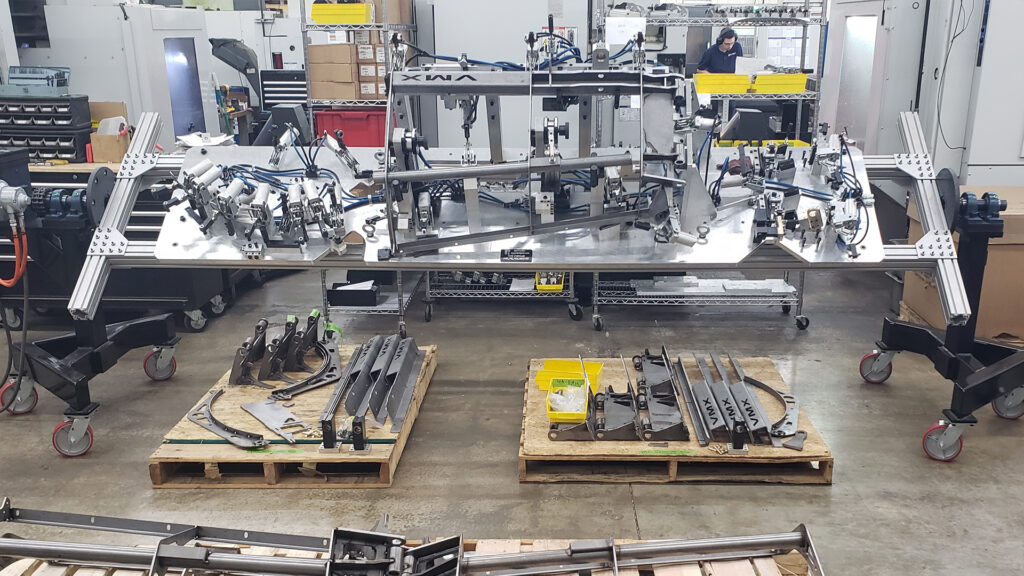
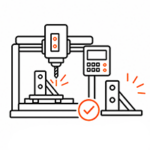
Rentapen custom welding fixtures are engineered to deliver durability, efficiency, repeatability, and unwavering weld quality for manual and robotic applications. Rentapen has specialized in engineering, designing and building welding fixtures since 1976. Our team of experts produces fixtures that are developed and tailored to meet the unique and exacting production requirements for each of our customers.
Benefits: Save Time, Money & Anxiety
Rentapen leverages its design experience to streamline the engineering and development process, getting production underway with speed and accuracy. We take full advantage of our strong knowledge base, deep history, qualified experience – along with our catalog of RAPid Tooling Components to produce custom fixtures that leverage proven engineering and production components. Our weld fixture designs take less time and cost less to build because we frequently integrate standardized, purchased components into our custom designs when and where a standard tool meets the need. We are not trying to reinvent the wheel.
We design and build a full spectrum of welding fixtures – from the simplest sub-assembly fit and tack fixtures to multi-step pneumatic and hydraulic clamping fixtures for the highest quality, highest volume precision parts. We serve a wide range of manufacturing industries – from trucking and landscaping to furniture and construction. (See box for industries served.) Our engineering teams design a range of fixtures – from manual tooling to multi-step robotic welding fixtures to solve challenging production and assembly challenges. Rentapen is the go-to resource for robot manufacturers and distributors. Our fixtures, designed for the exacting rigors of a robotic welding cell, have helped hundreds of manufacturers to achieve the precise repeatability potential that welding robots provide.
Industries Served
Welding – robotics manufacturers/integrators and manual welding applications
Agriculture – equipment manufacturers, tractors, seeders, balers, harvesters, combines, irrigation tools, mowers and implements,
Home & Garden – mowers, snow blowers, tractors and accessory manufacturers
Construction – heavy duty equipment manufacturers, trucks, lifts, forklifts, dozers, excavators, graders, compactors, cranes and utility vehicles
Mining – excavators, drill rigs, dozers, haul trucks, scaling machinery, LHD loaders, crushers and grinding mills
Military & Defense – marine, air and military vehicles
Automotive – car and truck manufacturers, accessories, trailering, suspension and EV equipment
Transportation – automotive, airline, trucking, train, motorcycle and bicycle manufacturers
Appliance – home, restaurant and foodservice equipment manufacturers, professional smoking and grilling equipment
Recreation Vehicles – ATV, UTV, snowmobile, RV and boat manufacturers
Material Handling – aerial lifts, forklifts, pallet and reach trucks, pickers, stackers, carts and tables
Medical – diagnostic equipment, monitoring and beds
Furniture Manufacturing – tables, desks, chairs, patio furnishings and camping equipment
Consumer Goods – appliances, home and garden equipment, convenience and specialty products manufacturers
Industrial Applications – gantry cranes, compressors and fluid systems
Job Shops – fabrication, machining and stamping equipment
Trailer – construction, landscaping, power generation and lighting equipment

Design Without Defects
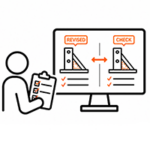
Rentapen employs a Zero-Defect Engineering Process™ to reduce errors and save manufacturers time and money in every custom engineering project we undertake:
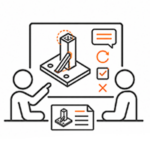
STEP 1.
In-depth customer briefing
STEP 2.
Preliminary design
STEP 3.
Preliminary design review
STEP 4.
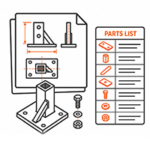
Start parts, drawings with standard components
STEP 5.
3D modeling applying Rentapen’s add-on software to reduce errors
STEP 6.
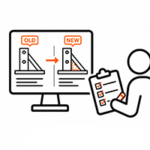
Customer design review and required changes
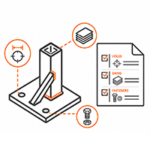
STEP 7.
Complete design with required holes, shims, fasteners
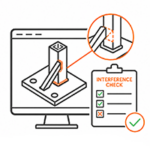
STEP 8.
Interference check engineering process
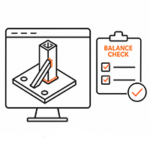
STEP 9.
Balance check
STEP 10.
Detail parts and assemblies
STEP 11.
Checked over by CAD Drafter
STEP 12.
Checked by Chief Engineer/Design Engineering Manager
STEP 13.
Checker changes made
STEP 14.
Back check to verify changes have been made correctly